
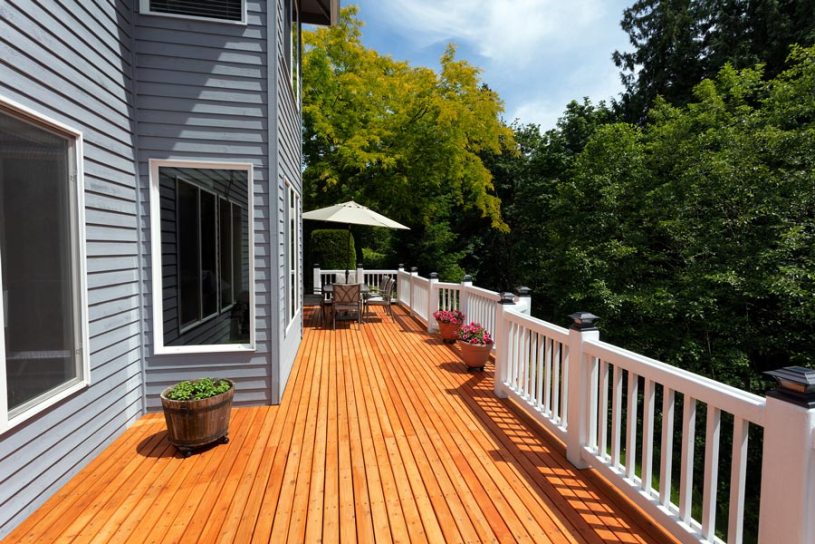
There are not many better ways of improving a room than to add some wood board flooring. Other than offering a special styling that is viable with for all intents and purposes any room’s stylistic theme, it will definitely enhance your home. Cost is normally a restricting element while building or updating your home, and thus there exists a reach in accessible ground surface.
Strong Hardwood flooring
There could be no more excellent ground surface arrangement, as I would like to think, than strong hardwood flooring. There isn’t anything that can go on the floor of a lounge, lounge area, room, or even passage, that talks a greater amount of significant worth and class than genuine hardwood flooring.
Commonly the deck is 3/4″ thick and the boards are somewhere in the range of 3 to 6″ wide. With an industrial facility stained and stained finish, these boards interlock with a tongue and notch plan. All set, from the outset, these sheets generally come is varying lengths so that the suitable “end break” faltering can be handily accomplished.
Establishment is very tedious, nonetheless, and some specialty devices will be required, including a power cut-off saw and a unique nailing instrument. Both of these instruments can be handily leased, nonetheless. Certain procedures and stunts are essential for a consistent introduce, so a total beginner shouldn’t endeavor this without legitimate examination or help. Introduce can be very monotonous and careful, and this kind of ground surface frequently requires the recruiting of experts.
The course of the sheets runs are restricted to running opposite across the joists, as all nails should go into the joists. Corner to corner formats are likewise satisfactory, however never run the deck lined up with the joists, on the off chance that you are laying it straightforwardly on a compressed wood subfloor.
The completed item will give you a rich real look, and a strong vibe underneath your feet. The deck is normally viewed as long-lasting, and makes offer extensive guarantees for their great item.
Cover flooring
Cover flooring, or as it’s occasionally called, a “drifting floor” was initially intended for little condo rental use. In Europe, little rental condos once in a while didn’t accompany “flooring,” so the leaseholder would introduce their own drifting floor, and afterward eliminate it when they left, and introduce it in their next loft.
I would agree, notwithstanding, that this deck is probably essentially as convenient as a rug, and the genuine legitimacy for cover flooring in North America is its expense. “Drifting floors” are the financially savvy answer for genuine “strong” hardwood flooring. It tends to be promptly introduced by any DIYer who has a removed saw and an estimating tape.
Overlay flooring is developed from a fiber board that ordinarily comes in 7mm and 12mm thicknesses. A visual “wood” layer is “overlaid” to the surface and safeguarded with a hard clear covering. This can offer an extremely practical portrayal of the genuine hardwood flooring it’s attempting to impersonate. Costs can change contingent upon thicknesses and cover quality.
Each board commonly is 4″ to 8″ wide (plus or minus), and frequently will have counterfeit showing up “breaks,” while its attempting to recreate the smaller slatted hardwood flooring. These phony “breaks” conflict with the genuine breaks, and as I would like to think, ruin the legitimate look. The ground surface style to go for, as I would like to think, is the wide board style, as in, every one of the breaks are the genuine breaks.
This sort of ground surface requires no nails, and sticking is either discretionary or not the slightest bit required. Tongue and notch interlocking, or “snap type,” is likewise inseparable from this kind of deck, and these wide sheets make establishment a breeze. A froth or “felt like” cushion layer, that is bought by the roll, should be set down first. This will level out any little dunks and ascends in the floor, and too, ease potential grinding squeaks. Sadly, this under layer gives the floor an elastic inclination underneath, which brings down the real feel. Thus it’s suggested that you buy the thickest ground surface that you can manage. At the end of the day, 7mm is more vulnerable and will feel spongier, and 12mm, which is commonly the thickest size, is better.
Dissimilar to genuine hardwood flooring, cover sheets appear to continuously come in a similar set board length. So the beginning board for each run should be cut at different lengths in order to accomplish the ideal board end faltering. With the two kinds of deck here, the last board in each run will clearly must be cut.
 Interior Designs Ideas